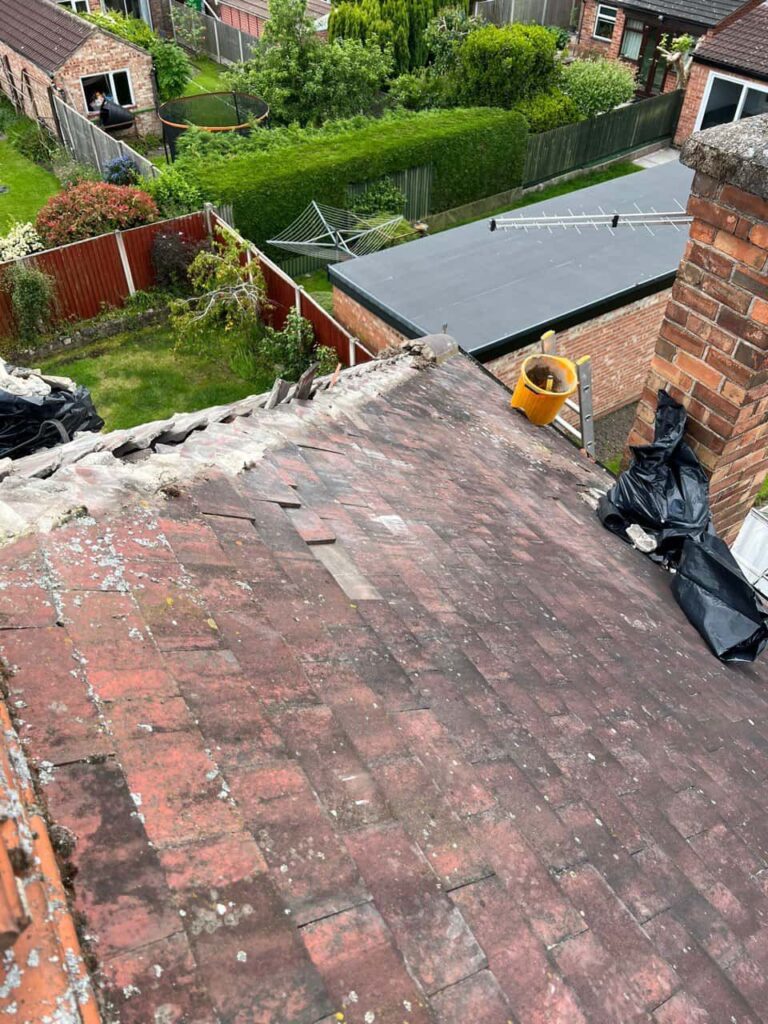
A roof leak can cause more than an occasional damp patch on a ceiling. If water continues to enter a property, it can affect insulation, roof timbers, plasterwork and other internal surfaces. The difficulty is that the visible signs of a leak do not always reveal where the water is getting in. Moisture can travel along roof components before appearing inside, making the original source difficult to identify without a thorough inspection.
Professional roof leak detection helps establish the cause of water ingress so that the correct repairs can be carried out. For homeowners in Bingham, Nottingham, identifying roofing problems early can help prevent further deterioration and protect the condition of the property.
Why Roof Leaks Can Be Difficult to Locate
Water does not always enter a roof directly above the area where a damp patch appears. Rainwater may pass through a damaged tile, defective flashing or a gap around a roof junction before travelling along battens, underlay or structural timbers.
This means that staining on an upstairs ceiling does not necessarily indicate that the roof covering directly above it is damaged. The actual entry point could be several feet away.
Some leaks are also intermittent. Water may only enter during heavy rainfall, strong winds or particular weather conditions. As a result, a roof can appear dry during an inspection carried out after the weather has improved.
Professional roofers consider the roof’s construction, visible defects and the pattern of internal moisture to help narrow down the source of the problem.
Common Causes of Roof Leaks
Several roofing defects can allow water to penetrate a property. Identifying the specific cause is essential because different problems require different repair methods.
Common causes include:
- Cracked or displaced roof tiles: Damaged or missing tiles can expose the underlying roof layers to rainwater.
- Defective lead flashing: Loose, cracked or deteriorating flashing around chimneys, valleys and roof junctions can create openings for water.
- Damaged roof valleys: These areas channel rainwater from adjoining roof slopes, so defects can allow water to enter beneath the covering.
- Worn flat roofing materials: Cracks, splits and deteriorated joints can compromise the waterproofing layer.
- Blocked or damaged gutters: Overflowing water can affect roof edges and contribute to dampness around external walls.
- Deteriorating roofline components: Damaged fascias, soffits and adjoining details may allow water to reach vulnerable areas.
A careful inspection helps distinguish between these potential causes rather than relying on assumptions based on the location of an internal stain.
Recognising the Early Warning Signs of a Roof Leak
Roof leaks often produce warning signs before significant internal damage becomes visible. Recognising these symptoms can help homeowners arrange an inspection before the problem develops further.
Look out for:
- Brown or yellow marks appearing on ceilings.
- Damp patches on upper-floor walls.
- Peeling paint or bubbling plaster.
- Musty smells in loft spaces.
- Wet or compressed loft insulation.
- Visible water droplets or damp timber within the roof space.
These signs can also be associated with condensation or plumbing problems, so they should not automatically be treated as proof of a roof leak. A professional assessment can help establish whether water is entering through the roof or whether another issue is responsible.
How Professional Roof Leak Detection Works
Effective leak detection involves examining the roofing system and tracing the likely route of water ingress. The inspection should focus on both the visible symptoms and the areas where roofing defects commonly develop.
A roofer may begin by checking the external roof covering for slipped tiles, damaged materials, defective flashing and problems around valleys or junctions. Accessible loft areas may also be examined for damp insulation, water staining and signs of moisture affecting the timbers.
The location and pattern of internal damage can provide useful clues. For example, staining near a chimney may justify closer attention to the flashing and surrounding masonry, while moisture around the eaves may indicate a problem with the roof edge or drainage.
Where the source is not immediately clear, further investigation may be needed. The aim is to identify the underlying defect so that repairs address the cause rather than simply covering the visible damage.
Why Correct Diagnosis Prevents Further Damage
Treating the visible symptoms without locating the original leak can allow water ingress to continue. For example, repainting a stained ceiling will not resolve a problem caused by damaged flashing or a displaced roof tile.
Persistent moisture can gradually affect several parts of a property. Roof timbers may remain damp, insulation can lose effectiveness and internal plasterwork may deteriorate. If the leak continues, the affected area can become more extensive.
Accurate detection helps ensure that repairs are directed at the actual source. It also allows nearby roofing components to be checked for damage that may have developed as a result of prolonged water exposure.
Why Prompt Roof Leak Repairs Matter
Once the source of a leak has been identified, arranging suitable repairs is important. Even a relatively small defect can allow repeated water penetration whenever rainfall occurs.
The repair required will depend on the condition of the roof and the location of the problem. This may involve replacing damaged tiles, repairing lead flashing, addressing defective roof joints or restoring sections of flat roofing.
A professional roofer can explain the cause of the leak and recommend work appropriate to the condition of the roofing system. Homeowners should avoid climbing onto the roof to investigate suspected damage themselves, as working at height can be dangerous.
Choosing Professional Roof Leak Detection in Bingham
Roof leak detection requires an understanding of how different roofing components work together. A thorough assessment should consider the roof covering, flashing, valleys, roofline and drainage rather than focusing only on the area where water appears indoors.
For property owners in Bingham, Nottingham, Bingham Roofing Repairs can help investigate suspected roof leaks and identify suitable repair solutions. Arranging an inspection when warning signs first appear can help prevent a minor roofing defect from becoming a more extensive problem.
Conclusion
Professional roof leak detection is important because the visible signs of water ingress do not always reveal the original source. By examining the roofing system carefully and tracing the path of moisture, an experienced roofer can identify the underlying defect and recommend appropriate repairs.
If you have noticed damp patches, ceiling stains or other signs of possible water ingress, contact Bingham Roofing Repairs to arrange a professional roof assessment and help protect your property from further damage.
Call us on: 0115 647 1193
Click here to find out more about Bingham Roofing Repairs
Click here to complete our contact form and see how we can help with your roofing needs.