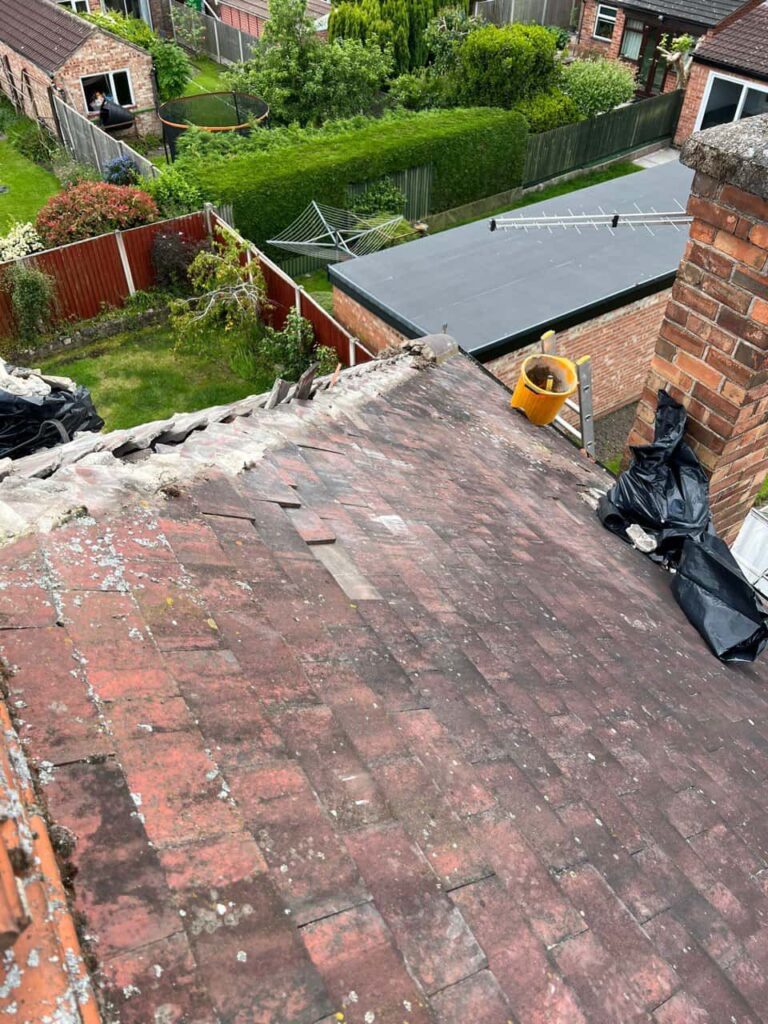
Pitched roofs are designed to shed rainwater efficiently, but some areas work harder than others. Valleys carry water from two adjoining slopes, ridges protect the highest point of the roof, and junctions seal the places where different surfaces or structures meet. If any of these details deteriorate, water may pass beneath the visible roof covering.
Leaks in these areas are not always obvious from ground level. A small opening can allow moisture to travel through the roof structure before it becomes visible indoors. For property owners in Bingham, Nottingham, understanding the common causes can help ensure roof problems are investigated before they spread.
Why Valleys, Ridges and Roof Junctions Are Vulnerable
Tiles and slates covering a straightforward roof slope rely on consistent overlaps. Valleys, ridges and junctions interrupt this regular arrangement and require additional weatherproofing materials. They are also exposed to concentrated water flow, wind pressure and natural movement within the roof.
Valleys Carry a High Volume of Rainwater
A roof valley forms where two pitched slopes meet internally. Rainwater from both surfaces is directed into this channel before flowing towards the guttering. This concentrated drainage makes the valley particularly important to the roof’s performance.
Leaves, moss and other debris can obstruct the channel, slowing the movement of water. When water cannot drain freely, it may spread sideways beneath nearby tiles or overflow into gaps around the valley lining.
Valley materials can also crack, split, corrode or move over time. Even a relatively small defect may allow a considerable amount of water to enter because of the volume passing through the area.
Damaged Tiles Can Expose the Valley Edges
Tiles or slates next to a valley are often cut to fit its shape. If these coverings slip, crack or become loose, the edge of the weatherproof channel may be exposed.
Mortar used along older valley edges can also deteriorate and fall away. Replacing the visible tile alone may not resolve the leak if the lining, fixings or supporting battens underneath have also been affected.
A complete inspection should assess both the valley itself and the coverings on either side.
Ridge Tiles Can Become Loose
Ridge tiles protect the meeting point at the top of two roof slopes. They may be secured with mortar or a mechanically fixed system, depending on the roof’s construction.
Mortar can crack and lose adhesion, while fixings may loosen or individual ridge components may move. Gaps can then develop beneath the ridge tiles, allowing wind-driven rain to reach the underlay or roof space.
A loose ridge should be assessed promptly because continued movement can enlarge the opening and affect surrounding tiles.
Roof Junctions Depend on Effective Flashing
Junctions occur where the roof meets a chimney, wall, dormer, extension or another roof section. These changes in shape interrupt the normal route of rainwater and depend on correctly installed flashing to remain watertight.
Flashing may split, lift or pull away from the adjoining surface. Gaps can also develop where separate pieces overlap or where surrounding mortar has deteriorated. Water may then travel behind the flashing rather than continuing safely down the roof.
Successful repairs need to restore the complete junction, including its overlaps and connection with the surrounding materials.
Natural Movement Can Open Small Gaps
Roof materials expand and contract as temperatures change. Buildings also experience minor movement over time. Most roof components are installed to accommodate this, but repeated movement can eventually weaken rigid mortar joints, sealants and poorly formed connections.
Valleys and junctions are particularly sensitive because different materials meet in the same area. If they move at different rates, small gaps can appear and gradually become routes for water ingress.
Wind-Driven Rain Can Reach Beneath Sound-Looking Materials
Rain does not always fall vertically. Strong winds can push it beneath loose ridge tiles, across valley edges and into small openings around flashing.
This explains why a roof may leak during particular weather conditions but appear dry during lighter rainfall. The intermittent nature of the problem does not mean it should be ignored. It often provides a useful clue about the location and type of defect.
Underlay Damage Can Worsen the Leak
The membrane beneath tiles or slates acts as a secondary barrier. If water passes through the outer covering, sound underlay should help direct it towards the eaves.
However, underlay can tear, become brittle or develop holes around fixings. Moisture entering near a valley, ridge or junction may then pass directly into the roof space.
Because this layer is concealed, an external defect may appear minor while the damage beneath it is more extensive.
Why the Internal Stain May Be Misleading
Water can run along underlay, battens and rafters before reaching a ceiling. The damp patch inside the property may therefore appear some distance from the failed valley, ridge or junction.
Repairing the roof directly above the stain without tracing the water’s route can result in the wrong area being treated. Professional leak detection examines both internal evidence and external roof details to identify the actual point of entry.
Warning Signs That Need Investigation
Signs of a possible leak include:
- Damp marks on ceilings or upper walls
- Staining near chimney breasts or roof angles
- Loose or uneven ridge tiles
- Cracked or missing mortar
- Debris collecting in roof valleys
- Displaced tiles beside a junction
- Damp insulation or stained roof timbers
- Leaks that appear during wind-driven rain
Prompt investigation can help keep the repair localised and reduce the risk of moisture affecting additional roof materials.
The Importance of a Complete Roof Assessment
A reliable inspection should consider more than the most obvious surface defect. Valley linings, surrounding tiles, ridge fixings, flashing, underlay, battens and accessible internal timbers may all need to be examined.
This approach establishes why the leak developed and how far the moisture has travelled. It allows the repair to address the underlying failure instead of temporarily covering its visible symptoms.
Conclusion
Pitched roofs frequently develop leaks around valleys, ridges and junctions because these areas manage concentrated water flow and connect different roofing materials. Blocked drainage, loose ridge tiles, damaged flashing, deteriorated mortar and failed underlay can all allow moisture into the roof.
Bingham Roofing Repairs provides professional roof inspections and repairs in Bingham, Nottingham. If you have noticed dampness or signs of deterioration around one of these vulnerable areas, contact our team to arrange an assessment and identify the appropriate repair.
Call us on: 0115 647 1193
Click here to find out more about Bingham Roofing Repairs
Click here to complete our contact form and see how we can help with your roofing needs.